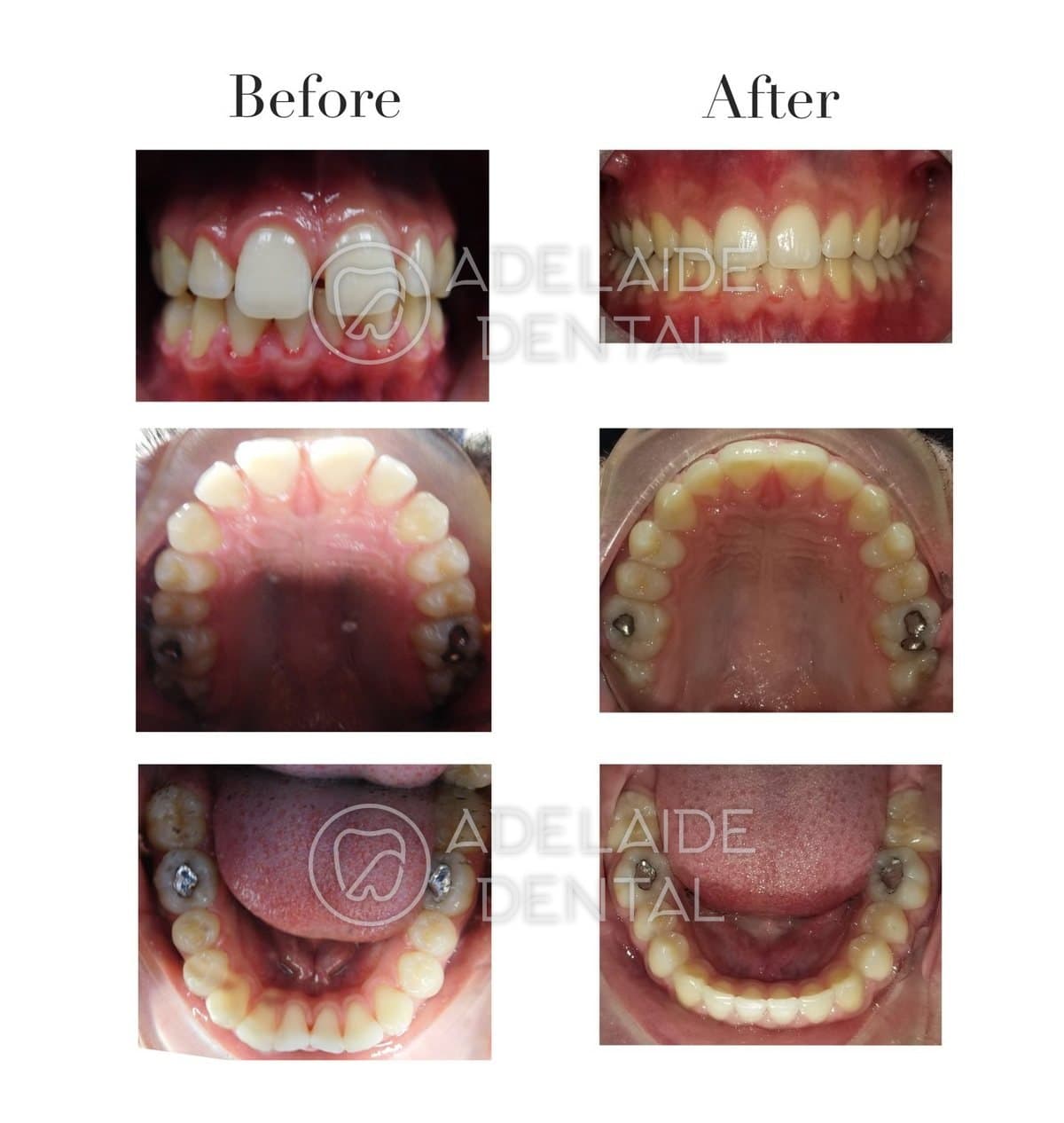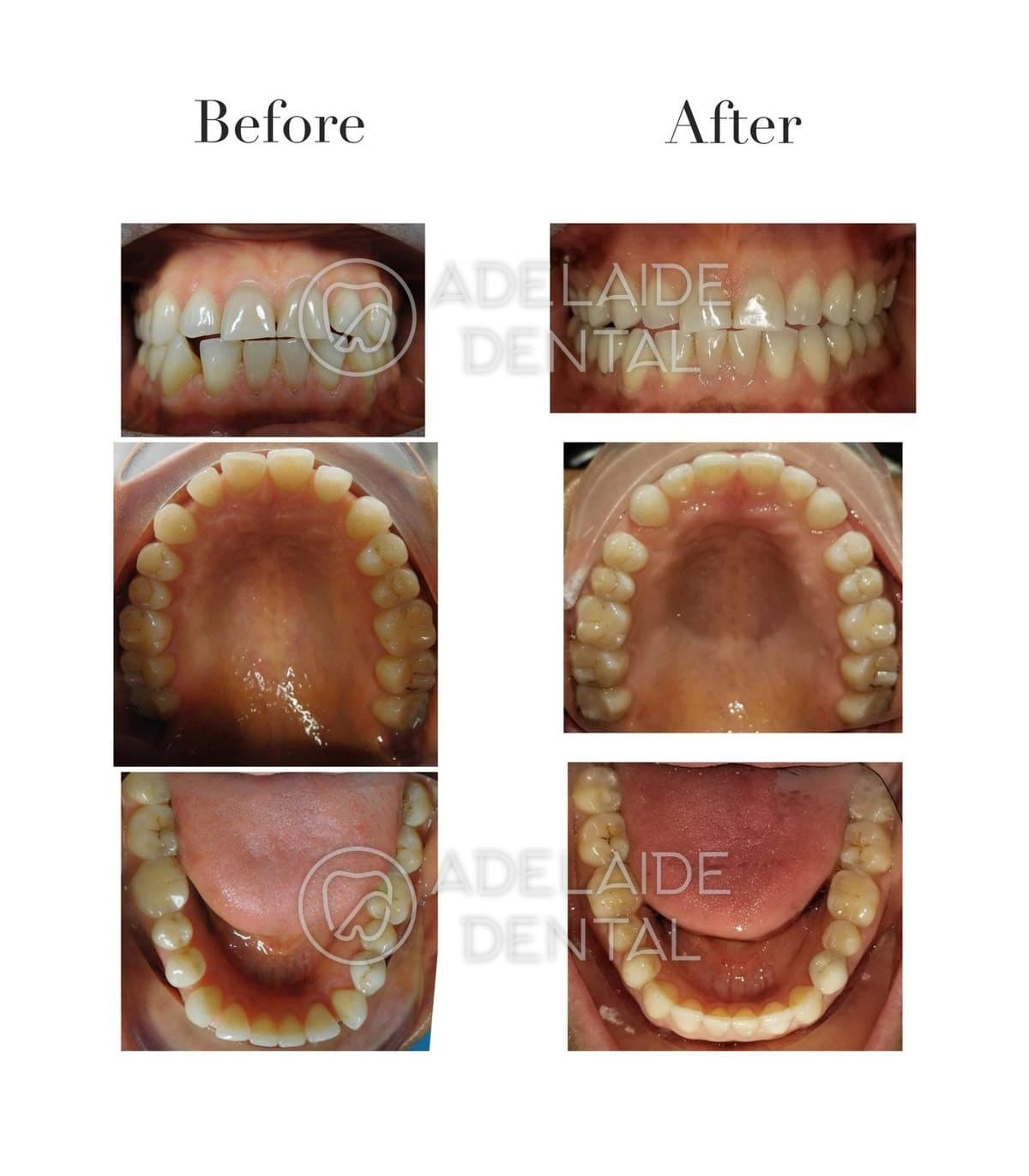
What is Invisalign?
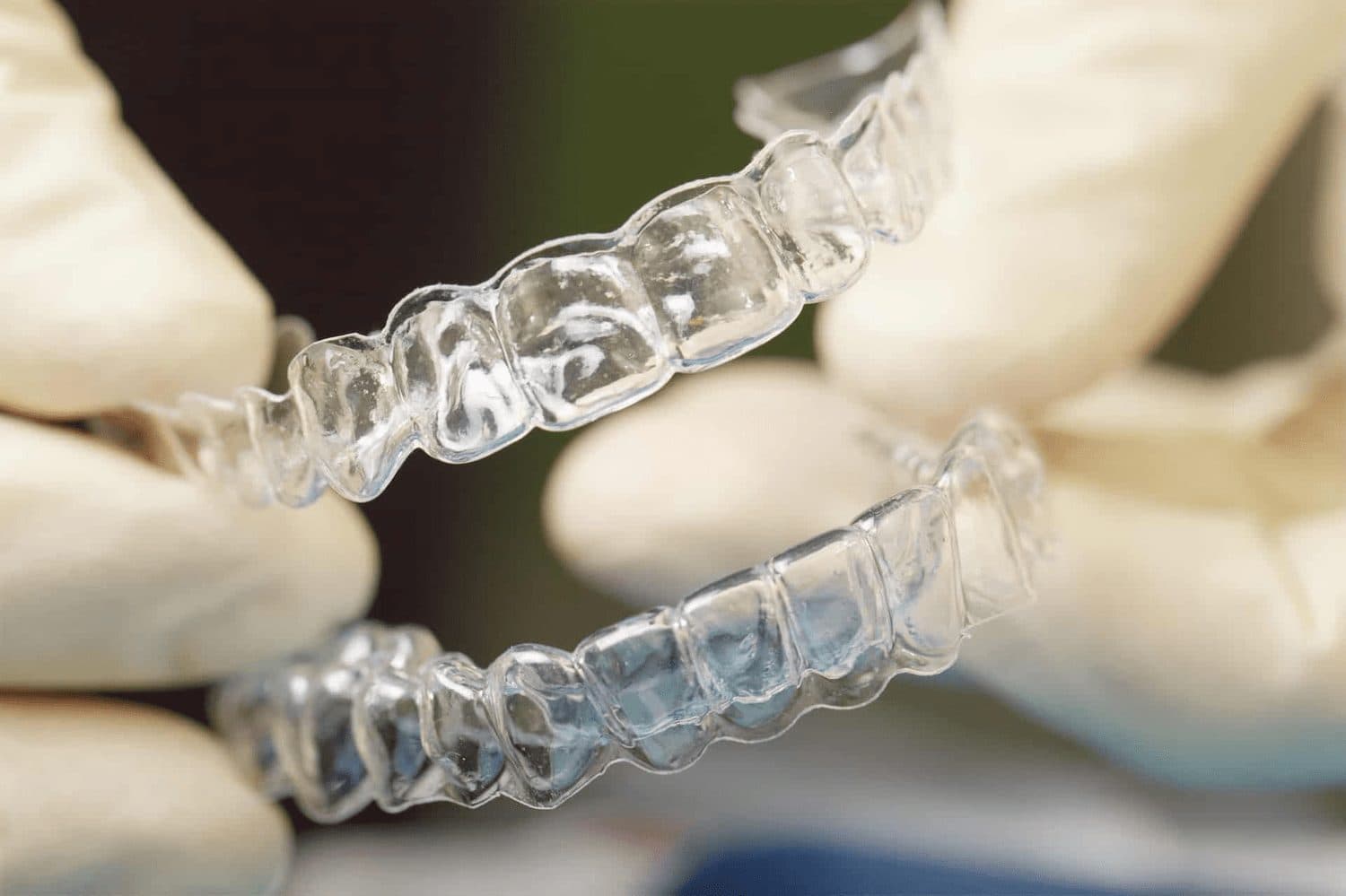
Invisalign moves your teeth with a series of clear plastic aligners instead of brackets and wires. Each aligner is shaped a little closer to your final smile than the one before. You wear one for a week or two, then change to the next.
A few small, tooth-coloured bumps, called attachments, are often bonded to your teeth. They give the aligner something to grip. We take them off when treatment is done.
What can Invisalign fix?
Aligners often work well for these concerns:
- Crowded teeth.
- Spaces between teeth.
- Many problems with how the top and bottom teeth fit together.
Some cases may suit braces or an orthodontist better. An orthodontist is a dentist with extra training in moving teeth. Large jaw differences, or teeth that must move a long way, are examples. At your consultation we will tell you honestly which group you may be in, before you commit to anything.
Aligners change where your teeth sit. They do not change their shape or colour. If that is what you want, veneers and whitening may be worth a chat, or read about professional teeth whitening.
What are the benefits of Invisalign?
The trays come out, so your daily cleaning is much like it was before. That matters, because teeth that are easy to clean tend to stay healthier.
- Easy care: take the trays out to brush and floss as usual.
- Low profile: clear plastic is hard to see.
- No metal: nothing to catch on your lips.
- A clear picture: we show you where your teeth are planned to finish.
When teeth line up well, they may also share the biting load more evenly. That may ease wear over time.
Living with aligners
Aim for 20 to 22 hours of wear each day. The trays come out for meals, for drinks other than water, and for brushing. How well you stick to this is the main thing that keeps treatment on schedule, so it helps to build it into your day.
Each new tray can feel tight for the first day or two. Some people have a slight lisp for a few days, and it usually settles within a week. Brush before the trays go back in, so food is not held against your teeth.
How long does Invisalign take?
It is a fair question to ask first. The answer depends on how far your teeth have to travel. Many adult cases take about six to eighteen months. Small corrections can be quicker.
Once your plan is made, we can give you an estimate for your own case.
What to Expect
- Consultation: we examine your teeth and gums, and take x-rays and photos. Any decay is treated first.
- Records: a scan or moulds of your teeth let us plan each small move.
- Treatment plan: we show you where your teeth are expected to end up, and how many aligners that may take.
- Wearing the aligners: you get your first set and a schedule for changing them.
- Check-in visits: brief visits about every six to eight weeks, to confirm your teeth are following the plan. We offer evening and Saturday times to help fit these around work.
- Retainers: you wear these afterward to hold the result.
Questions before you book? Please contact us.
How much is Invisalign?
At Adelaide Dental, Invisalign treatment ranges from about $7,000 to $10,000. It depends on how far the teeth have to move.